


Military raids and high-profile arrests make headlines, but they do not end the business of cartels. Mexican and South American trafficking organizations operate like multinational corporations: diversified revenue streams, global supply chains, and deep local recruitment pipelines. Long-term disruption will require a different approach. The US must pursue strategies that make the cartel business model financially unsustainable and logistically difficult. This means combining proven tactics with fresh ideas.
The points below are presented as broad concepts to help spark discussion, rather than full write-ups. Bullet points allow the ideas to be absorbed quickly, keep the focus on the main themes, and give room for others to share their perspectives or expand on them with their own insights.
Hit the Money
Cartels are profit-driven, so hitting their finances directly is one of the most effective tactics.
- Sanctions: Use the Foreign Narcotics Kingpin Act and related tools to freeze assets and bar cartel associates from the global financial system.
- AML enforcement: Monitor wire transfers, front companies, trade-based laundering, and crypto flows.
- Asset forfeiture: Seize properties, accounts, and equipment tied to trafficking.
- Gatekeeper accountability: Extend AML requirements to lawyers, accountants, and company formation agents who unintentionally aid laundering.

Pressure the Supply Chains
Without precursor chemicals, weapons, and reliable transport, cartel profits collapse.
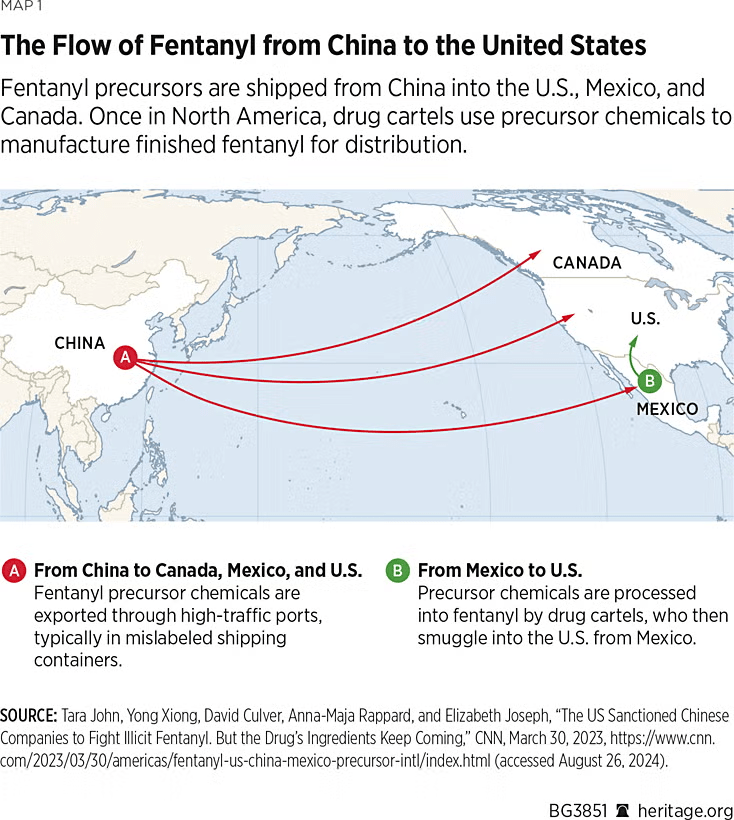
- Precursor controls: Tight licensing, end-user declarations, and transaction reporting for fentanyl and meth ingredients.
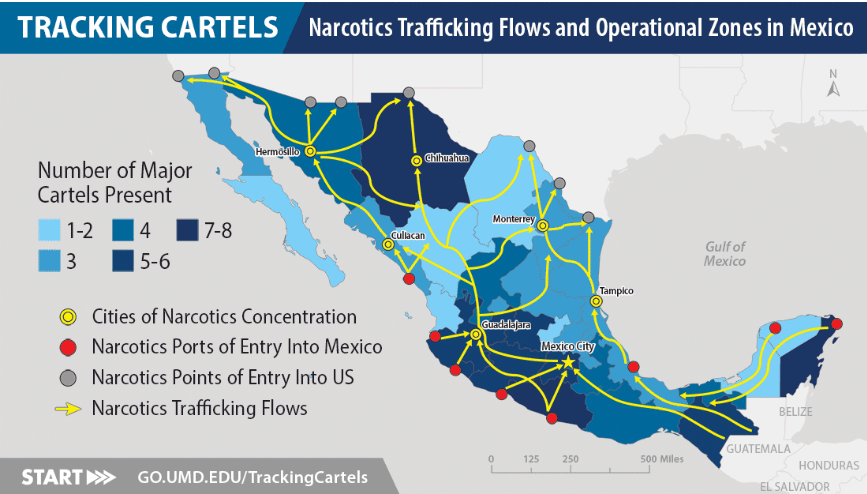
- Transport disruption: Increase inspections at land, sea, and air points. Use risk-scoring for parcels and coordinated seizures to impose losses.
- Weapon flow prevention: Enforce straw purchase laws, track high-volume ammo sales, and inspect southbound cargo for firearms.
Strengthen Law Enforcement and Legal Tools
Treat cartels as the national security threat they are.
- Legal designations: Label major cartels as Foreign Terrorist Organizations to unlock broader prosecution authorities.
- Multi-charge prosecutions: Use corruption, extortion, racketeering, and terrorism statutes alongside drug laws.
- Joint task forces: Expand US-Mexico intelligence-sharing, vetted police units, and targeted extraditions.
Undercut Recruitment
Cartels can replace jailed or killed members quickly. Cutting off their manpower is essential.
- Economic investment: Develop infrastructure, job opportunities, and vocational training in high-risk regions.
- Community programs: Support local leadership, protect activists, and fund youth initiatives.
- Public messaging: Counter the narco “glamor” with real accounts of cartel life and its short, violent reality.
- Exit pathways: Offer reduced sentences or amnesty for low-level members who defect.
Leveraging Technology and Intelligence
Modern cartels use drones, encrypted comms, and cyber tools; the response must be smarter.
- Surveillance: Deploy drones, thermal imaging, and satellite analytics to detect labs, routes, and cultivation sites.
- Data analysis: Use AI to flag suspicious trade, travel, or financial activity linked to trafficking networks.
- Cyber disruption: Infiltrate encrypted networks, disable cartel IT infrastructure, and track crypto transactions.
- Fusion centers: Integrate federal, state, and Mexican partners to rapidly act on shared intelligence.

Conclusion
Cartels are resilient because they operate across multiple domains: finance, logistics, community, and technology. Disrupting one area temporarily hurts them; attacking all at once can slowly erode their power. The US can combine financial sanctions, supply chain disruption, legal pressure, recruitment prevention, and intelligence innovation into a long-term strategy. Success will not be a single decisive victory, but a steady squeeze that makes cartel operations unprofitable and unsustainable.
 The Security Brief
Leave a comment