Tag: disinformation

  • Russia’s Digital Playbook: Targeting Poland’s Election with Anti-Ukrainian Disinformation

    Russia’s Digital Playbook: Targeting Poland’s Election with Anti-Ukrainian Disinformation

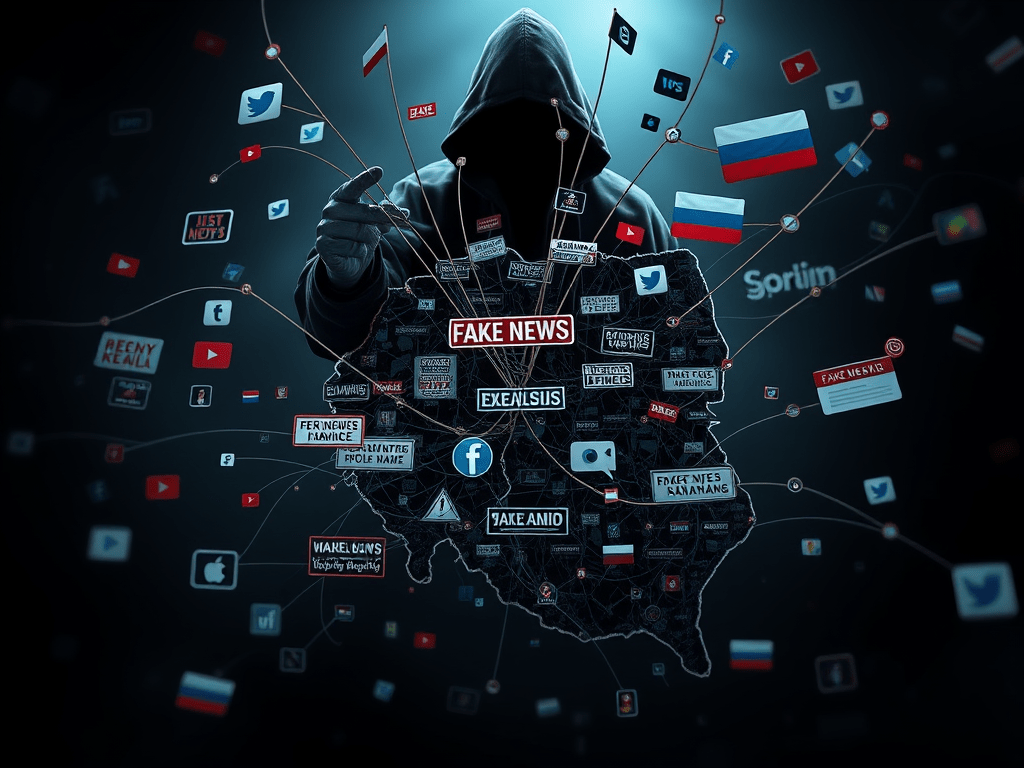
    As Poland approached a critical presidential runoff on June 1, Russian-linked influence networks ramped up efforts to flood Polish social media with anti-Ukrainian messaging. The Institute for Strategic Dialogue (ISD) recently published a detailed report showing how these campaigns are designed to erode public support for Ukraine and stir domestic resentment, right when political tensions are at their peak

    Two main disinfo operations are behind this push. One is Operation Overload, which has a track record of impersonating media outlets and recycling content. The other is a newer ecosystem tied to the Pravda and Portal Kombat networks, which lean heavily on AI-generated articles and fake screenshots to manufacture outrage.

    Some of the false claims spreading online included:

    • A fake story alleging that Ukrainian refugees were planning terror attacks in Poland
    • A re-edited satire video presented as real, suggesting Ukrainians were exploiting Poland’s welfare programs
    • AI-written content designed to look like legitimate Polish journalism
    • False narratives amplified so widely that even language models like ChatGPT ended up echoing them when prompted

    Analyst Comments

    This is classic information warfare, just modernized.

    Russia doesn’t need to hack a system if it can hack the conversation. These campaigns are trying to fracture Poland’s support for Ukraine by painting refugees as a threat socially, economically, and even physically. It is low-cost, high-volume influence work, meant to stoke outrage, not debate.

    What makes this different from past operations is how AI tools and platform vulnerabilities are baked into the tactics. Generative models are now being used to churn out disinfo content that mimics real reporting. Influencer accounts are being used to frame false stories as trending news. Even satire is weaponized, knowing that once something goes viral, the original context is often lost.

    As we head into another global election cycle, Poland is not the only target. Similar tactics are already being seen elsewhere, especially in countries where refugee issues, defense policy, or migration tensions are front and center. This is a good reminder for policymakers, tech platforms, and threat analysts: the battlefield may be digital, but the consequences are real.

    Reference

    https://www.isdglobal.org/digital_dispatches/russia-aligned-campaigns-amplify-negative-sentiment-towards-ukrainians-in-poland-ahead-of-a-decisive-presidential-vote/

  • Doppelgänger Was Just the Beginning

    Doppelgänger Was Just the Beginning

    Rethinking Russian Influence Operations in the Age of Weaponized Visibility

    Earlier this month, Sweden’s Psychological Defence Agency and Lund University released Beyond Operation Doppelgänger, a 200-page deep dive into the capabilities of Russia’s Social Design Agency (SDA). While most public reporting has focused on the now-infamous mirror sites used to spread fake news, this report makes a clear case that those cloned websites were just one piece of a much broader, and more enduring, strategy.

    According to the authors, SDA isn’t some freelance influence shop. It’s part of a well-funded, Kremlin-directed propaganda network that merges digital marketing tactics with political messaging, psychological ops, and elements of classic espionage. This ecosystem is not designed to convince people of a particular narrative. It’s built to persist, to stay present, and to dominate the conversation. Success isn’t measured by belief, it’s measured by visibility.

    What the Report Really Tells Us

    Doppelgänger was not the operation, it was a delivery method

    Those cloned news sites? One tactic among many. The report makes it clear that SDA’s influence work goes far beyond any one campaign. Doppelgänger was part of a series of coordinated “counter-campaigns” aimed at Europe, Ukraine, the United States, and beyond.

    SDA uses attention, not persuasion, to justify effectiveness

    The goal isn’t to get people to agree, it’s to make sure Russian messaging shows up in the conversation. If a piece of content gets fact-checked, reported on, or criticized, that’s considered a win. The more visibility these campaigns get, the more SDA is rewarded by its Kremlin backers.

    The leaks could have been deliberate

    One of the more provocative angles in the report is the suggestion that some of the leaked SDA documents might have been released on purpose. Whether the goal was to overload researchers, build internal prestige, or tie up resources while new infrastructure was being built, the leak may have been a calculated move.

    Narratives are interchangeable, presence is the goal

    SDA isn’t wedded to any particular storyline. The messages are interchangeable. If a campaign, whether it’s a meme, a bot swarm, or a fake news drop, gets traction, it’s scaled up. If it doesn’t, it’s dropped. The point is to flood the zone, not to persuade.

    Some Questions Worth Asking?

    This report calls into question a lot of our assumptions about what influence operations are trying to do—and how we should be responding. A few questions that come to mind:

    • If visibility is the goal, not the risk, how do defenders responsibly counter disinformation without amplifying it?
    • Are we unintentionally helping adversaries by publicizing their operations too effectively?
    • Where is the line between countering propaganda and participating in its feedback loop?
    • Are our current frameworks designed to deal with long-term influence ecosystems or only isolated events?
    • Are we seeing the emergence of a disinformation-industrial complex, where performance metrics and funding cycles shape how propaganda is created and sustained?

    Beyond Operation Doppelgänger doesn’t just describe a disinformation campaign, it maps out a system that adapts, exploits visibility, and treats media attention, sanctions, and cyber takedowns as signals of progress.

    It’s not about changing minds. It’s about owning space…

    Link to full report here:https://mpf.se/psychological-defence-agency/publications/archive/2025-05-15-beyond-operation-doppelganger-a-capability-assessment-of-the-social-design-agency