Disclaimer: The following is an academic exercise and the information below was obtained through open-source, unclassified platforms and research.
Excuse the plethora of formatting issues; this was brought over from my original Microsoft Word document. I would suggest reading from the original PDF linked here for visuals and clearer formatting.
Chinese Military Modernization Key Findings
Executive Summary:
Chinese military modernization likely reshapes regional deterrence dynamics through 2031. The PLA strengthens its ability to sense, target, and strike regional forces by integrating long-range precision fires, expanded space-based ISR, advanced electronic warfare capabilities, and sustained naval pressure. These developments likely reduce allied warning time, increase China’s coercive leverage, and elevate the risk of rapid escalation during crises.
Key Findings:
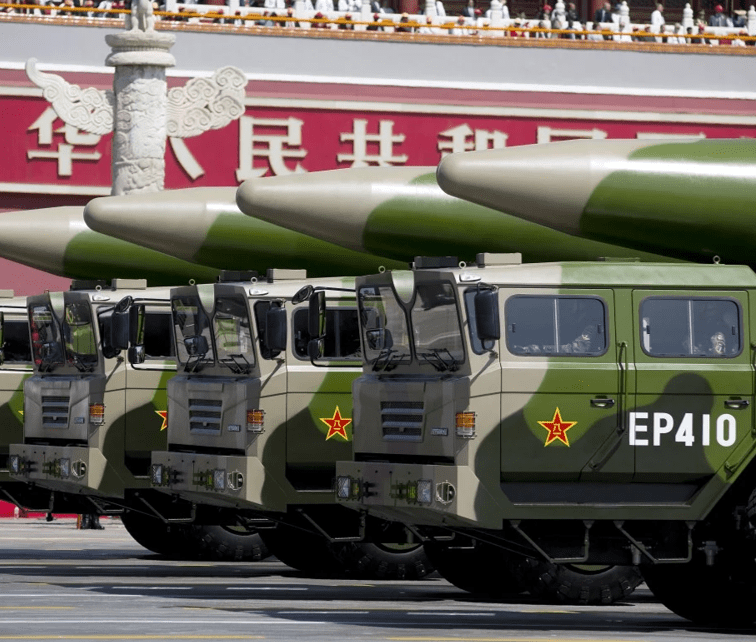
- China likely enhances its precision-strike capability through integrated ISR networks and long-range missile forces. Expanded deployment of DF-26, DF-17, and conventional strike brigades strengthens China’s ability to target US and allied bases across the First and Second Island Chains.
- The PLA likely improves its situational awareness through rapid growth in space-based ISR. New Yaogan electro-optical, synthetic aperture radar (SAR), and SIGINT satellites give Chinese commanders persistent regional surveillance that supports time-sensitive targeting and reduces allied decision time.
- China’s electronic warfare modernization likely degrades allied sensing and complicates early warning efforts. Expanding PLA EW brigades and multispectral deception capabilities increase the likelihood that China can disrupt radar, obscure force movements, and challenge ISR platforms during crisis onset.
- PLAN expansion likely intensifies coercive pressure near Taiwan’s outlying islands. Routine encirclement drills and heightened presence around Kinmen, Matsu, and Pratas allow Beijing to normalize elevated military activity and shape the battlespace before potential conflict.
- US and allied denial strategies likely preserve credible deterrence through 2031. Dispersed basing, hardened C2, expanded ACE (agile Combat Employment) and EABO (Expeditionary Advanced Base Operations) operations, and improved trilateral intelligence sharing complicate Chinese strike planning and reduce the probability of decisive PLA success in the opening phase of conflict.
- PLA limitations in joint integration and sustained fires likely constrain operational effectiveness. Magazine depth, battle-damage assessment challenges, and uneven command integration reduce China’s ability to maintain rapid strike tempo during extended conflict periods.
Contents
Chinese Military Modernization Key Findings. 2
Analyst Contact Information. 3
Chinese Military Modernization Outlook LFAR.. 6
PLA Strike And ISR Modernization LFAR.. 12
PLA EW And Counter-ISR SFAR.. 22
PLA Space-Based ISR Modernization SFAR.. 24
Annex I: Supporting Visuals. 27
Annex II: Analysis of Competing Hypotheses. 28
Annex III: Source Reliability Matrix. 30
About This Document
This document compiles a term-long body of analytic work that examines China’s military modernization and its implications for regional deterrence through 2031. X directed the analyst to produce one overarching long-form assessment and several short-form analytic reports (SFARs) that address distinct aspects of the People’s Liberation Army’s (PLA) evolving operational capability. The final product integrates these assessments to provide a consolidated view of how PLA advancements in strike systems, space-based ISR, electronic warfare, and naval operations influence crisis stability and allied warning time in the Indo-Pacific.
The analyst approached this task by applying structured analytic methods that included trend analysis, evidence weighting, competitive hypothesis evaluation, and cross-domain capability assessment. The overarching long-form analytic report (LFAR) synthesizes the primary judgments developed across the term, supported by the more narrowly focused SFAR reports. Each SFAR assesses a specific modernization vector that contributes to China’s broader military posture. Together, these products show how PLA modernization affects regional dynamics and shapes Beijing’s coercive leverage.
This document includes the Overview LFAR, one previously submitted LFAR, and four SFARs. It reflects only publicly available information and employs estimative language consistent with Intelligence Community analytic standards. The analytic judgments represent the analyst’s best assessment of likely trajectories and operational implications based on currently available evidence.
Chinese Military Modernization Outlook LFAR
Chinese Military Modernization Likely To Reshape Indo-Pacific Deterrence Through 2031
Executive Summary:
Chinese military modernization across strike, space-based ISR, naval, and electronic warfare systems likely reshapes Indo-Pacific deterrence through 2031. The PLA accelerates long-range precision-strike integration, fields hypersonic weapons, and strengthens satellite-enabled targeting that compresses allied warning timelines. The PLAN increases coercive pressure around Taiwan’s outlying islands through sustained presence and encirclement drills. US and allied denial strategies, deeper space and missile-warning cooperation, and persistent PLA weaknesses in integration and sustainment likely preserve credible deterrence. Escalation risk likely peaks between 2026 and 2029 as China tests maturing capabilities.
Key Findings:
Drivers
- The PLA expands long-range precision fires and fuses them with space-based and airborne ISR, which likely enables coordinated theater-wide strikes within 72 hours of conflict initiation.
- China fields DF-17 and advances DF-27 hypersonic weapons, which likely compress allied decision timelines and expand Chinese strike reach to Japan, Taiwan, Guam, and carrier groups.
- PLA commanders strengthen electronic warfare and counter-ISR capabilities through long-range jammers, passive detection arrays, and multispectral deception systems, which are likely to degrade allied situational awareness by 2028.
- The PLAN intensifies coercive pressure around Taiwan’s outlying islands through sustained fleet growth, routine encirclement drills, and blended Coast Guard and PLAN operations.
Constraints
- US, Japanese, and Taiwanese commanders expand denial strategies such as ACE, EABO, mobility, dispersion, and deception, along with efforts to harden and reconstitute ISR and space-based warning systems, which likely complicate PLA strike planning and preserve deterrence.
- PLA units struggle with limited magazine depth, uneven joint integration, and inconsistent battle damage assessment capability, including under contested space and electromagnetic conditions, which limits sustained high-tempo operations.
- US-Japan-Taiwan coordination strengthens shared situational awareness, including space and missile warning, and crisis management, and likely offsets escalation pressures during China’s 2026–2029 capability-testing period.
Discussion:
PLA Strike and ISR Integration Reshapes Regional Deterrence
PLA commanders continue to integrate long-range precision fires with a maturing ISR enterprise. Rocket Force units field larger inventories of DF-26 and DF-21 variants and pair them with high-fidelity targeting networks that KJ-500A aircraft, over-the-horizon radars, and Yaogan and Gaofen satellites support. These networks shorten the sensor-to-shooter cycle and likely enable rapid, theater-wide strike options during the opening phase of a Taiwan contingency.
Chinese planners now pursue a system that collects, identifies, and strikes targets within a compressed decision window. This approach moves China beyond earlier Anti-Access/Area Denial (A2/AD) concepts. Instead of limiting US intervention through distance alone, the PLA now looks to impose operational paralysis by striking key nodes before allied forces reposition or disperse.
Space-Based ISR Growth Likely Enhances Targeting But Increases Reliance On Vulnerable Assets
Recent developments in PLA space-based ISR suggest a deliberate effort to build layered constellations that provide persistent, all-weather coverage of the Western Pacific. China fields and upgrades electro-optical, synthetic aperture radar, maritime surveillance, and electronic intelligence satellites that together improve wide-area search, cueing, and refined target location for long-range missile systems. As revisit rates improve and data from multiple sensors are fused, Chinese commanders likely gain more continuous tracks on US and partner naval forces, forward airbases, and logistics nodes. This space-based ISR network enhances the effectiveness of PLA strike systems but also increases Beijing’s dependence on vulnerable on-orbit assets in a crisis against a capable counterspace adversary.
China’s leadership views this integrated strike and ISR system as the foundation for “intelligentized warfare,” which emphasizes cognitive pressure, accelerated decision cycles, and multisource fusion. PLA writings often highlight the need to seize initiative through speed, information dominance, and coordinated fires rather than rely solely on static defense.
Hypersonic Weapons Compress Decision Time and Expand PLA Strike Options
PLA Rocket Force units field DF-17 hypersonic glide vehicles and advance DF-27 development to extend strike reach deep into the Pacific. DF-17 likely gives China maneuverable, survivable options against regional fixed targets, while DF-27 likely threatens Guam and carrier strike groups.
Hypersonic weapons reshape crisis dynamics because they impose extreme time pressure on decision-makers. Their maneuverability complicates prediction, their speed reduces warning, and their flight profiles challenge interception. Chinese officials publicly describe hypersonics as stabilizing tools, but Chinese force structure, exercises, and doctrinal commentary increasingly position them as coercive instruments that exploit gaps in regional missile defenses.
These systems allow Chinese commanders to execute rapid precision campaigns while generating significant cognitive stress on adversaries. Japan, Taiwan, and the US must therefore allocate resources toward dispersal, mobility, and hardened infrastructure to offset Chinese hypersonic advantages.
Electronic Warfare and Counter-ISR Modernization Threatens Allied Early Warning
PLA officers invest aggressively in electronic warfare and counter-ISR capabilities that disrupt sensing, delay targeting, and undermine confidence in allied situational awareness. PLA brigades employ long-range jammers that target airborne ISR platforms, passive detection systems that track aircraft without emitting signatures, and multispectral deception platforms that overload or confuse sensors. PLA researchers also pursue cognitive EW concepts that allow real-time adaptation of jamming strategies.
Eastern Theater Command training increasingly links EW brigades with air defense and missile units. These exercises demonstrate Chinese intent to blind or confuse allied ISR networks during the initial phase of conflict. Chinese commanders want to create uncertainty, force allied hesitation and reduce the ability to detect PLA preparations.
If Chinese EW units disrupt early-warning systems, allied commanders face delayed detection of missile dispersal, amphibious staging, or decoy deployments. This disruption likely increases escalation risk due to reduced clarity producing pressure to act early or reposition quickly without complete information.
PLAN Growth Increases Pressure On Taiwan’s Outlying Islands
The PLA Navy expands surface and amphibious forces and sustains routine presence near Taiwan’s outlying islands. Chinese destroyers, frigates, and amphibious ships conduct coordinated maneuvers around Pratas, Kinmen, and Matsu. Chinese commanders normalize encirclement patterns that convey political pressure, gather ISR, and chart Taiwanese response behavior.
PLAN and Coast Guard units also cooperate to blend coercive signaling with a veneer of maritime law enforcement. Chinese policymakers frame these operations as domestic jurisdictional enforcement while they simultaneously erode Taiwan’s operational freedom. This dual-purpose approach strengthens Beijing’s coercive leverage and complicates allied assessments of Chinese intent.
Sustained PLAN pressure strains Taiwan’s maritime forces, increases operational fatigue, and challenges indicator-and-warning frameworks that are needed to distinguish routine Chinese presence from pre-invasion preparations.
PLA Leaders Pursue Cross-Domain Integrations As The Core Of Coercive Power
Chinese planners seek to combine precision fires, ISR fusion, EW disruption, hypersonic reach, and naval pressure into a coherent system that shapes the battlespace before conflict. This cumulative approach produces effects that exceed the value of each capability individually.
PLA leaders pursue the ability to:
- Identify, classify, and track targets across domains
- Strike with speed and precision
- Blind or confuse adversary sensors
- Pressure Taiwan through persistent naval presence
- Exploit ambiguity around hypersonic reach and maneuverability
This integrated system looks to weaken allied decision cycles and exploit any hesitation created by degraded situational awareness. Cross-domain integration therefore represents the most consequential transformation within Chinese military modernization.
Allied Denial And Resilience Strategies Likely Preserve Deterrence Through 2031
US, Japanese, and Taiwanese commanders adapt to PLA modernization with resilient denial strategies. ACE disperses aircraft across multiple austere sites, and EABO places maritime and missile units in difficult-to-target locations. Taiwan increases survivability by expanding mobility, deception, and distributed fires. Japan strengthens early-warning networks and deepens US cooperation.
These measures complicate PLA targeting cycles and reduce China’s ability to achieve decisive outcomes in the opening phase of conflict. Chinese commanders still struggle with magazine depth, joint integration, and battle damage assessment, which limits PLA endurance in high-tempo operations.
These realities likely sustain credible deterrence despite rapid Chinese modernization.
Escalation Risk Likely Peaks Between 2026 and 2029
Beijing plans to test and validate new capabilities during this period. PLA units will likely conduct high-tempo joint strike drills, expand maritime exclusion zones, intensify cyber and information operations, and run complex EW exercises that probe allied ISR resilience.
These activities increase friction because they blend training, coercion, and intelligence collection. Without reliable crisis-communication mechanisms between Washington and Beijing, even minor incidents, like an aircraft intercept or an ambiguous missile flight, could escalate quickly.
The convergence of maturing capabilities and aggressive testing cycles likely makes 2026-2029 the most dangerous window for miscalculation.
Analytic Confidence
I assess confidence in this judgement as medium-high. I anchored the assessment in structured analytic reasoning and several corroborating open sources, including DoD annual reports, research institute findings, and regional defense assessments. PLA operational proficiency, command integration, and readiness timelines remain uncertain, but observable modernization patterns strongly support the judgments presented.
PLA Strike And ISR Modernization LFAR
PLA Strike And ISR Modernization Likely Shapes Taiwan Strait Deterrence Through 2031
Executive Summary:
By 2028, the People’s Liberation Army (PLA) will likely achieve a 72-hour strike and ISR overmatch in the Taiwan Strait. Allied denial and resilience measures will very likely preserve credible deterrence through 2031. Crisis stability from 2026 to 2029 will remain fragile as Beijing tests coercive thresholds through exercises and information operations. Modernization will likely shift deterrence toward denial and resilience models. Emerging indicators such as DF-26 expansion and J-20B and J-35 deployments will likely confirm PLA readiness for integrated precision campaigns.
Key Findings
Drivers
- The rapid expansion of long-range precision strike and ISR capabilities will likely allow the PLA to conduct coordinated, theater-wide attacks within 72 hours of conflict initiation. Over the past decade, China has significantly increased the number of DF-26 and DF-21 variants, fielded the YJ-21 hypersonic missile, and improved its command-and-control networks linking satellite, radar, and airborne sensors. These systems now provide the PLA Rocket Force with greater reach and target discrimination across the First Island Chain, reducing response times from hours to minutes.[i]
- Beijing’s pursuit of its 2027 military modernization goal is accelerating efforts to achieve joint integration and real-time targeting. The Central Military Commission has directed the services to meet operational benchmarks that align with “intelligentized warfare,” integrating space-based ISR, cyber, and electronic warfare into combined-arms operations. This timeline places pressure on the PLA to demonstrate readiness for a Taiwan contingency before the end of the decade, explaining the pace and scope of its procurement and exercise activity.[ii]
- Expanding satellite constellations and persistent ISR coverage will likely give China short-term coercive leverage during the early phase of any Taiwan contingency. The launch of new Yaogan and Gaofen satellites, paired with KJ-500A early warning aircraft and over-the-horizon radar, enables the PLA to maintain continuous track of surface and airborne targets. These capabilities will improve battle damage assessment and shorten the sensor-to-shooter cycle, increasing Beijing confidence in its ability to neutralize key military and logistics nodes during the opening hours of a conflict.[iii]
Constraints
- Allied denial measures such as dispersed basing, deception, and mobile missile systems will very likely preserve credible deterrence through at least 2031. The U.S. Pacific Deterrence Initiative, Japan’s defense buildup plan, and Taiwan’s asymmetric modernization collectively emphasize survivability over retaliation. Distributed operations under Agile Combat Employment (ACE) and Expeditionary Advanced Base Operations (EABO) doctrines allow forces to operate from austere or temporary locations, complicating PLA targeting cycles and ensuring continued operational capacity after initial strikes.[iv]
- Limitations in PLA joint command integration, magazine depth, and battle damage assessment will likely prevent sustained operational dominance. While China’s modernization has improved hardware and ISR, the ability to fuse these assets into synchronized joint operations remains uneven. The Rocket Force’s limited munitions stockpiles, combined with insufficient training time for joint targeting and post-strike assessment, would constrain the duration of effective large-scale operations against Taiwan and allied forces.[v]
- Strengthened coordination and crisis management among the United States, Japan, and Taiwan may mitigate escalation risks during Beijing’s 2026–2029 testing phase. Trilateral planning, shared situational awareness, and expanded communication channels increase the likelihood that gray-zone or coercive PLA activities will be managed before triggering direct conflict. While friction is inevitable, consistent transparency and signaling across alliances will reduce the probability of unintended escalation during China’s period of capability testing and deterrence signaling.[vi]
Discussion
PLA Long-Range Strike Integration
The PLA is entering a decisive modernization phase aimed at closing operational gaps with the U.S. and regional partners. Central to this effort is their integration of long-range precision fires with an expanded ISR architecture. Systems like the DF-26 ballistic missile, YJ-21 hypersonic anti-ship missile, and H-6N air-launched strike platform form the backbone of China’s regional strike capability. Supported by KJ-500A early warning aircraft and the growing Yaogan and Gaofen satellite constellations, these systems are designed to create continuous situational awareness and enable rapid targeting decisions. By 2028, the PLA will likely be capable of executing coordinated, theater-
wide strikes within 72 hours of conflict initiation, creating a short-term deterrence shock window that could paralyze Taiwan’s command-and-control (C2) before external intervention.
Comment: The PLA’s emphasis on pairing ISR with precision strike assets demonstrates its move toward “intelligentized” joint warfare, allowing for more rapid decision loops and reduced warning time for adversaries. This integration poses a significant challenge for Taiwan’s early warning network, which heavily relies on U.S. and Japanese shared ISR coverage.
Allied Adaptation And Denial Posture
Despite these advancements, the U.S., Japan, and Taiwan are adapting their deterrence posture to emphasize denial and resilience rather than punishment. The Agile Combat Employment (ACE)[vii] and Expeditionary Advanced Base Operations (EABO)[viii] concepts reflect this shift, enabling forces to disperse, relocate, and reconstitute quickly under contested conditions.[ix] Taiwan’s emphasis on mobile missile systems, coastal defense, and rapid runway repair further complicates PLA targeting cycles and limits the effectiveness of a first strike.[x] These adaptations make it highly likely that deterrence will remain credible through 2031, even as the PLA approaches full modernization.
Comment: ACE and EABO show that U.S. and allied strategy is evolving to counter PLA long-range precision fires by reducing predictability and improving survivability. This approach will reduce the likelihood of a successful first strike but will require sustained logistical readiness and allied interoperability to remain credible.
Crisis Stability And Escalation Risk (2026-2029)
Crisis stability remains fragile from 2026 to 2029 as Beijing tests coercive thresholds through large-scale joint strike exercises, maritime exclusion zones, and integrated cyber and information campaigns. These actions normalize aggressive behavior and help PLA units collect intelligence on allied response patterns. [xi]
Comment: The lack of reliable crisis communication between Beijing and Washington increases the risk of accidental escalation during periods of military exercise or cyber operations. Intelligence on PLA intent will be crucial, as deception and misinformation continue to be key components of Chinese operational planning.
Transition Toward Resilience-Based Deterrence
Deterrence in the Indo-Pacific is shifting toward denial and resilience as PLA strike precision and ISR reach expand. The decisive factor increasingly becomes how quickly each side can restore operational capacity after initial strikes. By 2031, the side capable of reconstituting combat power within hours rather than days likely holds the advantage in a Taiwan contingency.[xii]
Comment: PLA modernization is reshaping deterrence dynamics in the Taiwan Strait, yet conflict is not inevitable. The determining factor will be the resilience and adaptability of allied forces. Sustained investments in deception, rapid repair, and agile logistics is likely to deter aggression more effectively than increased offensive capacity, demonstrating that endurance is now central to credible deterrence.
Analytic Confidence
I assess confidence in this judgment as moderate. I used the Analysis of Competing Hypotheses (ACH) method to evaluate how PLA modernization affects regional stability. Source reliability ranges from high to very high across DoD reports, CSIS analysis, and Taiwan’s defense publications. Uncertainty remains around PLA command integration, exercise objectives, and readiness levels, though observed modernization patterns strongly support this assessment.
PLAN Expansion SFAR
PLA Navy Expansion Highly Likely To Escalate Pressure On Taiwan’s Outlying Islands
Executive Summary:
It is highly likely the PLA Navy (PLAN) will escalate gray-zone coercion against Taiwan’s outlying islands over the next 12–18 months because rapid naval modernization, amphibious fleet growth, and blockade-style exercises are expanding Beijing’s capabilities. Despite U.S. and regional pushback, Beijing is unlikely to scale back, as sustained shipbuilding and increased patrols since mid-2024 show intent to steadily erode Taiwan’s operational space.
Discussion:
The PLAN continues to add surface combatants, submarines, and amphibious vessels at a pace unmatched regionally. Recent U.S. Department of Defense (DoD) reporting on Chinese military modernization claims China commissioned more than a dozen major combatants in 2024, and construction at Jiangnan and Huludao shipyards indicates further acceleration through 2026. These new platforms expand Beijing’s ability to maintain constant patrols and escalate presence around Taiwan’s outlying islands.
Since early 2025, PLAN vessels have routinely maneuvered within proximity to Pratas and Kinmen. Researchers reported on 22 September 2025 that several PLAN ships conducted coordinated movements around these islands, assessing this activity as part of gray-zone coercion operations.[xiii] Recent analysis suggests the Strait Thunder 2025A exercise signaled an intent to normalize higher-tempo coercion in the Strait, reinforcing expectations of sustained pressure on Taiwan.[xiv]
Contrasting research from Chinese maritime sources frames coast guard patrols near Taiwan’s outlying islands as routine inspections under domestic law, portraying them as stabilizing measures. These operations often coincide with PLAN patrols and exercises, providing a law-enforcement veneer to military pressure in contested waters.[xv]
Analytic Confidence:
The analytic confidence for this assessment is high. The analyst used ACH to weigh competing hypotheses as the structured method of analysis. Sources are recent, assessed at medium to high reliability, and provide both corroboration and contrasting perspectives. Both the task complexity and the analyst’s expertise are moderate. The time available was sufficient and the analyst worked alone with no collaboration.
Hypersonic Missiles SFAR
Hypersonic Missile Expansion Highly Likely To Erode Regional Deterrence In The Next 12-24 Months
Executive Summary:
It is highly likely that China’s DF-17 and DF-27 hypersonic glide vehicle (HGV) systems will weaken regional deterrence within 12–24 months. Open-source reporting indicates continued PLA Rocket Force modernization that stresses existing missile defenses and compresses decision timelines. Beijing presents hypersonics as a defensive and stabilizing offset to missile defenses, but current indicators point to growing coercive leverage across the Western Pacific.
Discussion:
China’s hypersonic missile development is a key component of military modernization. The U.S. Department of Defense (DoD) reported in December 2024 that the PLA Rocket Force continues to field the DF-17 and pursue the longer-range DF-27, with ranges sufficient to strike Guam. External assessments of the DoD report highlight the DF-27’s potential as both a conventional and anti-ship platform, expanding China’s capacity to hold forward bases and carrier groups at risk.[xvi]
Chinese state documents and media describe hypersonics as defensive and stabilizing offsets intended to deter intervention, counter missile defenses, and protect sovereignty.[xvii] Allied and independent assessments judge the same capabilities as coercive, citing reduced warning time, stressed layered defenses, and increased crisis instability even if technical uncertainties persist.
Open-source analysis notes unresolved issues in guidance, thermal protection, and reliable re-entry control, and cautions that public demonstrations may overstate maturity.[xviii] China’s opacity and limited visibility into hypersonic testing sustain uncertainty around DF-27 payloads, production scale, and unit-level proficiency. At the same time, recent studies project continued Chinese investment in hypersonics to offset U.S. missile defenses, extend strike options deeper into the Pacific, and reinforce regional deterrence posture.[xix]
Analytic Confidence:
The analytic confidence for this assessment is medium. The analyst applied ACH to weigh competing perspectives, considering both U.S. assessments and Chinese official framing. The source base is recent and generally reliable, with contrasting viewpoints on maturity and strategic effects. Uncertainties remain on DF-27 performance parameters, production scale, and unit proficiency. The task complexity and analyst’s expertise are moderate. The analyst worked alone with no collaboration and time available was adequate.
PLA EW And Counter-ISR SFAR
PLA Integrated EW And Counter-ISR Modernization Likely To Degrade Allied Situational Awareness By 2028
Executive Summary:
It is likely that China’s investment in EW, counter-ISR systems, and sensor deception will significantly reduce allied situational awareness across the Western Pacific by 2028. PLA writings and observed force development indicate a maturing strategy that blends jamming, passive detection, spoofing, and decoys to disrupt adversary targeting cycles. These capabilities strengthen China’s A2/AD posture and will complicate US and allied efforts to monitor PLA movements during a regional crisis.
Discussion:
The PLA continues to expand its EW and counter-ISR capabilities across ground, air, maritime, and space domains. Open-source assessments from 2023 through 2025 identify growth in long-range jammers, dedicated electronic countermeasure brigades, airborne EW platforms, and passive detection systems that track foreign aircraft and vessels without emitting signals.[xx] PLA academic writings describe these efforts as central to China’s approach to “informationized” and “intelligentized” warfare.[xxi]
Joint training in the Eastern Theater Command has incorporated long-range jamming against simulated maritime ISR aircraft, as well as coordination between EW units, air defense brigades, and long-range missile forces.[xxii] These activities show an operational objective to degrade adversary sensing, communications, and targeting during the early phase of a conflict. Chinese defense analysts emphasize the importance of creating uncertainty and delay within foreign ISR architectures to shape escalation dynamics.
The PLA is also expanding decoy systems, including inflatable radar reflectors, electromagnetic spoofing assets, and multispectral deception platforms intended to overload or misdirect foreign sensors. Parallel investment in unmanned aerial vehicles with EW payloads provides additional reach for jamming and deception. Research on cognitive EW indicates continued PLA interest in automating jamming selection and adapting effects in real time.
A competing explanation is that PLA EW and counter-ISR modernization will be limited by persistent challenges in unit-level proficiency, uneven joint integration, and inconsistent training quality. If these constraints do not improve, China may only achieve a moderate impact on allied situational awareness. Recent DoD assessments, however, show the PLA steadily expanding joint EW training and improving integration between EW brigades, air defense units, and long-range strike forces, which reduces the likelihood of this alternative. [1]
Through 2028, China will likely field additional airborne EW variants, expand coastal EW companies opposite Taiwan, improve spectrum situational awareness tools, and integrate decoy systems into surface and missile brigades.[xxiii] These developments will challenge allied ISR coverage, complicate force posture decisions, and reinforce China’s overall deterrence posture by reducing adversary confidence in early-warning and targeting information.
Analytic Confidence:
The analytic confidence for this assessment is medium-high. The analyst applied comparative assessment of PLA doctrinal writings, recent US and allied reporting, and visible changes in PLA training. Source reliability is medium to high, though uncertainty remains regarding unit-level proficiency and deployment timelines. Task complexity was moderate, time constraints were moderate, and the analyst worked independently.
PLA Space-Based ISR Modernization SFAR
PLA Space-Based ISR Growth Likely Enhances Long-Range Targeting And Reduces Allied Warning Time
Executive Summary:
The PLA likely strengthens its long-range precision-strike capability through rapid expansion of space-based ISR systems. China fields more Yaogan electro-optical, synthetic aperture radar, and signals intelligence satellites that support real-time targeting for Rocket Force and Navy units.[xxiv] These systems likely shorten allied warning timelines and increase PLA ability to identify and track mobile forces during a regional crisis.[xxv] China’s growing launch tempo and improved data-fusion infrastructure likely accelerate this trend through 2030.
Discussion:
China expands its satellite constellations to support precision strike. The 2024 DoD China Military Power Report states that the PLA operates dozens of Yaogan-series satellites with electro-optical, radar, and SIGINT payloads. PLA commanders use these systems to track naval movements, classify surface targets, and monitor operational activity across the Indo-Pacific. Synthetic aperture radar satellites give PLA operators day and night visibility. Electro-optical satellites provide high-resolution imagery that supports identification. SIGINT satellites collect radar and communication signals that reveal posture changes and unit activity.
China strengthens its ground architecture to process and distribute satellite data. Ground stations at Wenchang, Jiuquan, Taiyuan, and Xichang handle increasing data volume and support rapid dissemination to operational units. PLA writings highlight the need to merge imagery, radar returns, and signals intelligence into a unified targeting picture.[xxvi] This integration likely increases PLA confidence in time-sensitive strike decisions and reduces the time required to generate accurate targeting data.
Space-based ISR likely compresses allied warning time during a Taiwan contingency. Persistent coverage allows PLA commanders to monitor US and allied force movements, including dispersed aircraft, naval deployments, and amphibious staging. SAR imagery likely detects runway activity, refueling operations, and missile reload cycles. These indicators strengthen PLA ability to act before US and allied forces reposition. Space-based ISR also supports maritime exclusion tasks by giving commanders continuous visibility of key straits and choke points.
Some analysts argue that China may struggle to process the volume of satellite data or integrate it across commands. They point to bandwidth limits and uneven training standards. If these constraints slow dissemination, PLA space-based ISR may provide only moderate improvements in targeting.
Current evidence gives this view low weight. China increases its launch tempo, expands ground infrastructure, and publishes extensive research on satellite integration. These indicators support the likelihood of continued ISR improvement.
Analytic Confidence:
I assess confidence as medium-high. Several reliable sources, including the 2024 DoD China Military Power Report and independent research institutes, corroborate China’s rapid ISR growth. Uncertainty remains regarding PLA proficiency in real-time fusion, which supports medium-high confidence rather than high.
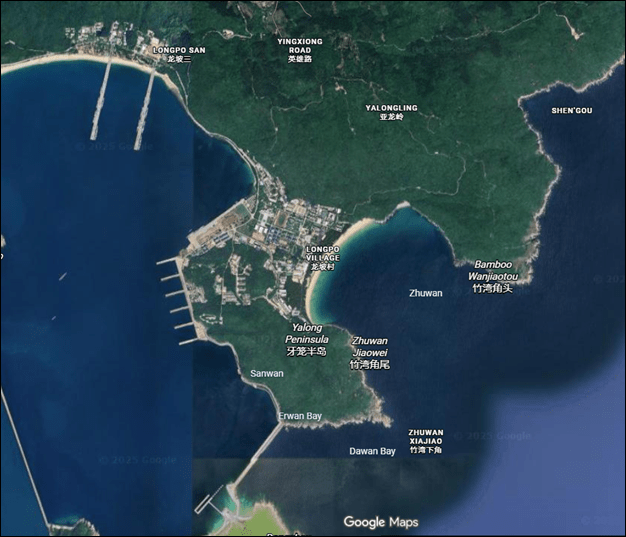
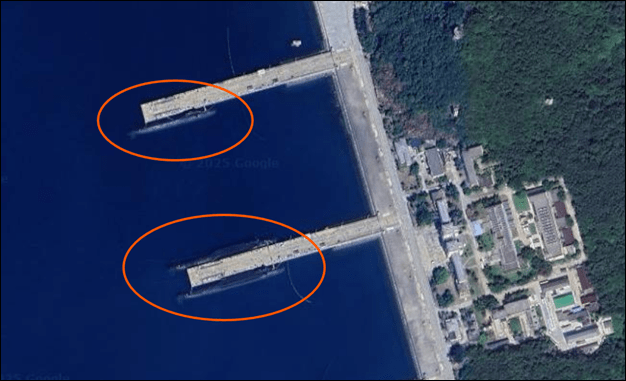
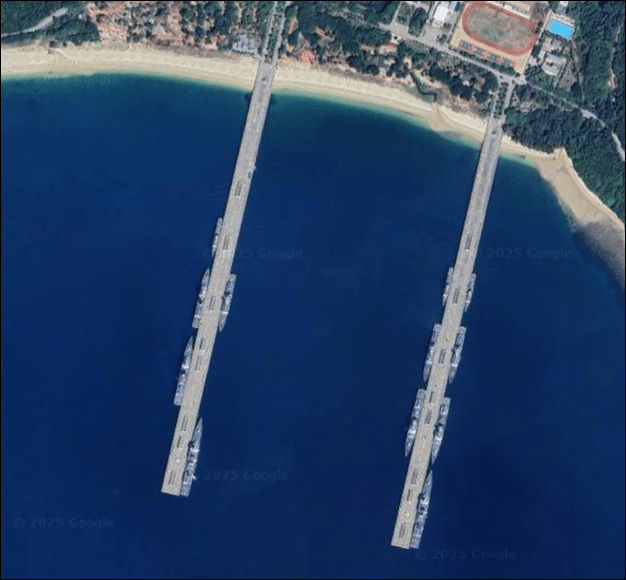
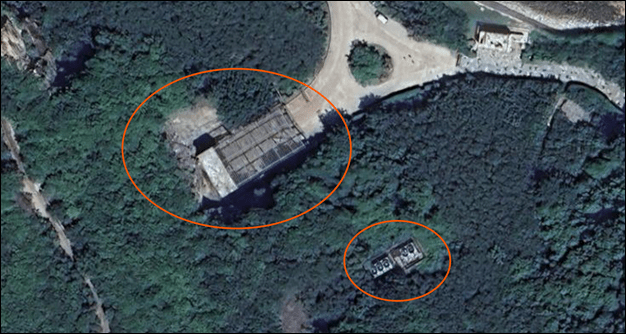
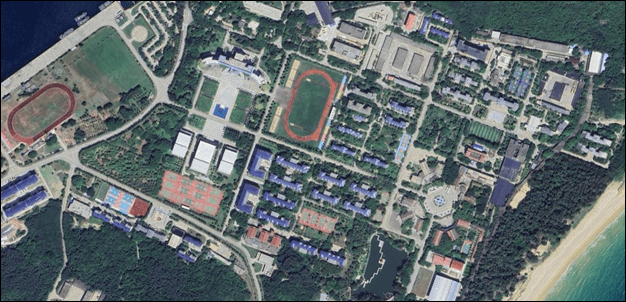
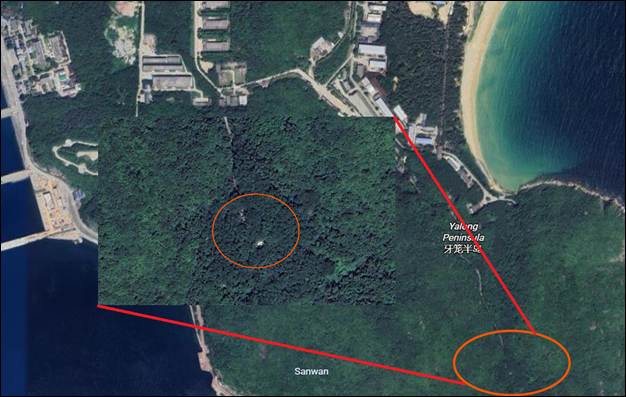
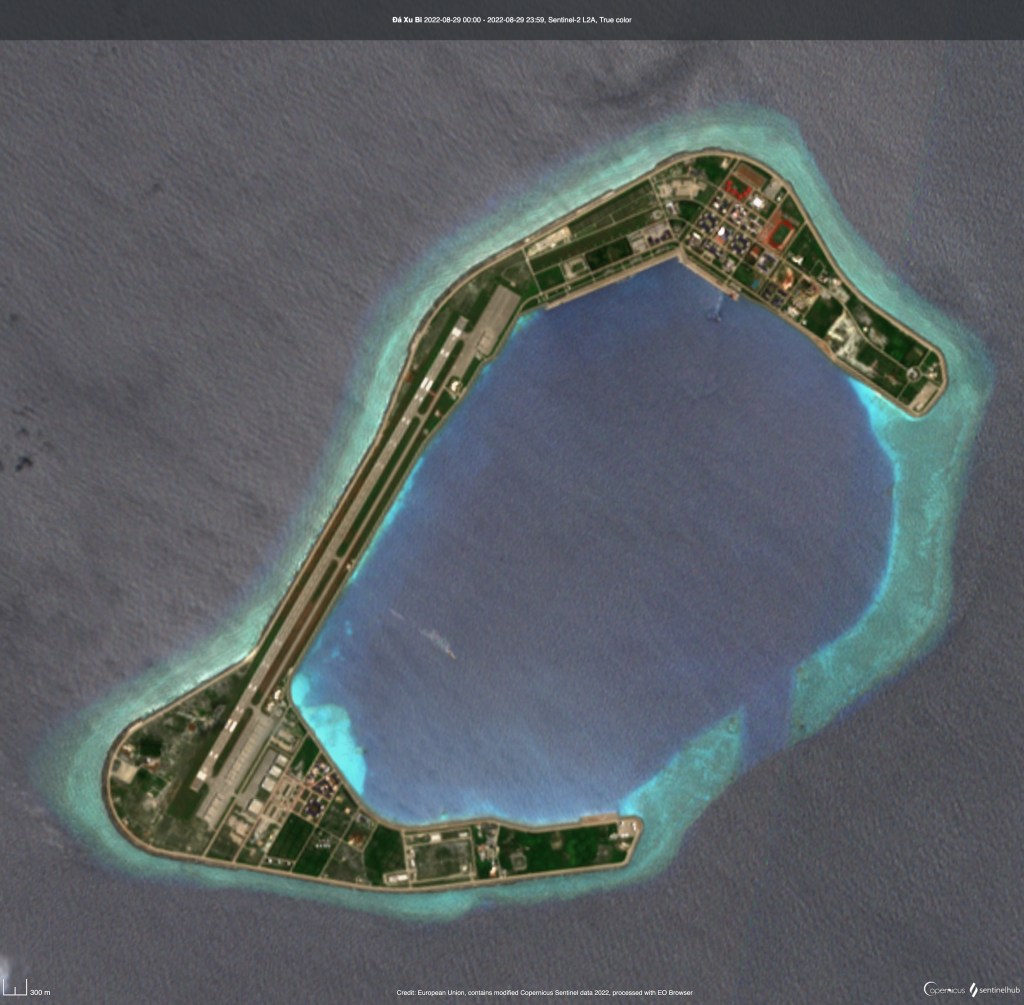
Annex I: Supporting Visuals
Annex II: Analysis of Competing Hypotheses
Hypotheses:
- H1: PLA military modernization significantly undermines regional deterrence and increases the risk of conflict in the Taiwan Strait by 2031.
- H2: PLA military modernization is largely offset by US, Japanese, and Taiwanese denial and resilience measures, preserving credible deterrence through 2031.
- H3: PLA military modernization remains constrained; China cannot achieve substantial military advantage and deterrence remains strongly favorable to US and allied forces.
| Source | Reliability | H1 | H2 | H3 | Evidence |
| Dept. of Defense | Very High | C | C | I | Details rapid PLA modernization and expanding capabilities, while noting emerging allied responses and residual PLA gaps. |
| Bismarck Analysis | Medium | C | N | I | Argues PLA has transformed into a much more capable force, supporting substantial Chinese gains. |
| ORF | High | C | C | I | Describes broad PLA advances but also highlights structural constraints and regional balancing. |
| CSIS translation | High | N | C | I | Focuses on US denial concepts (ACE, EABO, resilient posture) designed to blunt PLA advantages. |
| Army University Press | Very High | C | C | I | Emphasizes PLA threat but argues robust denial posture can sustain deterrence. |
| FPRI | High | N | C | I | Highlights trilateral coordination and crisis management that help preserve deterrence. |
| AFDN | Very High | N | C | I | Provides doctrinal basis for dispersed basing and survivability against PLA strikes. |
| Marines/Defense Priorities | Very High/Medium | C | C | I | EABO strengthens denial; Defense Priorities piece underscores difficulty of US intervention and PLA advantages. |
| Congress | Very High | C | C | I | Assesses PLA threat and evaluates US/ally options; generally supports contested but still viable deterrence. |
| ROC | Very High | C | C | I | Stresses growing PLA threat yet also documents Taiwan’s asymmetric, resilience-focused reforms. |
| CFR/CSIS ChinaPower/Crisis Group | High/High/High | C | C | I | Describe PLA coercive activity and crisis risk but also note alliance management and crisis-control efforts. |
| CNAS/Atlantic Council /NBR | Very High/High/Very High | N | C | I | Argue that networked alliances, industrial base cooperation, and minilateral security ties can offset PLA gains. |
| ISW | High | C | N | I | Tracks increasing PLA gray-zone pressure against Taiwan and outlying islands. |
| Jamestown | High | C | N | I | Interprets encirclement drills as signaling future increases in PLA coercion and contingency readiness. |
| USNWC CMSI | Medium | C | N | I | Shows how Beijing uses lawfare and “law-enforcement” narratives to mask coercive maritime pressure. |
| War on the Rocks | High | C | N | I | Emphasizes pace and scope of PLA modernization and its implications for US posture. |
| Global Times | Low | I | I | C | Chinese state outlet portrays PLA posture as defensive and stabilizing, downplaying threat and escalation risk. |
| National Security Journal | High | C | N | I | Argues DF-27 hypersonic capability poses serious challenge to US and regional forces. |
| CSIS MissileThreat | High | C | N | I | Describes maturing hypersonic arsenal that increasingly holds regional targets at risk. |
| RAND/CSIS | High/Medium | C | N | I | Detail PLA EW, counter-ISR, and blockade concepts that could degrade allied awareness and access. |
| CNA | High | C | N | I | Explains PLA pursuit of intelligentized, information-centric warfare to gain operational advantage. |
| CASI | Very High | C | N | I | Provides doctrinal evidence of PLA focus on integrated joint operations, space, cyber, and EW. |
| USCC | Very High | C | C | I | Assesses PLA capabilities and coercive behavior while also highlighting allied and US responses and policy options. |
| CSIS | High | C | N | I | Shows rapid expansion of Chinese space and ISR capabilities and associated risks to US leadership. |
| RAND | High | C | C | I | Evaluates Chinese space and counterspace capabilities and discusses how US posture can adapt. |
Annex III: Source Reliability Matrix
| Source | Rating | Score |
| DoD 2024 CMPR | Very High | 5 |
| Bismarck Analysis: PLA Transformed | Medium | 3 |
| ORF Military Modernization 2025 | High | 4 |
| CSIS Denial Strategy Translation | High | 4 |
| Army Univ. Press: Deterring the Dragon | Very High | 5 |
| FPRI Trilateral Dialogue | High | 4 |
| AFDN 1-21 ACE Doctrine | Very High | 5 |
| USMC EABO | Very High | 5 |
| Defense Priorities: Target Taiwan | Medium | 3 |
| CRS R47589 | Very High | 5 |
| Taiwan National Defense Report 2023 | Very High | 5 |
| CFR Taiwan Strait | High | 4 |
| CSIS ChinaPower | High | 4 |
| Crisis Group: Preventing War | High | 4 |
| CNAS: Networked Deterrence | Very High | 5 |
| Atlantic Council: Production Diplomacy | High | 4 |
| NBR: Minilateral Security Cooperation | Very High | 5 |
| ISW China: Taiwan Update | High | 4 |
| Jamestown: Strait Thunder | High | 4 |
| USNWC CMSI Maritime Report | Medium | 3 |
| War on the Rocks: CMPR Readout | High | 4 |
| Global Times | Low | 2 |
| National Security Journal: DF-27 | High | 4 |
| CSIS MissileThreat: Hypersonics | High | 4 |
| RAND: EW | High | 4 |
| CSIS Blockade Plans | Medium | 3 |
| CNA: Intelligent Warfare | High | 4 |
| CASI: Science of Military Strategy | Very High | 5 |
| USCC 2024 Annual Report | Very High | 5 |
| CSIS Strategic Trajectories: China Space Rise | High | 4 |
| RAND: Space/Counterspace | High | 4 |
[i] https://media.defense.gov/2024/Dec/18/2003615520/-1/-1/0/MILITARY-AND-SECURITY-DEVELOPMENTS-INVOLVING-THE-PEOPLES-REPUBLIC-OF-CHINA-2024.PDF (Very High)
[ii] https://brief.bismarckanalysis.com/p/the-pla-has-transformed-itself-to (Medium)
[iii] https://www.orfonline.org/research/mapping-the-recent-trends-in-china-s-military-modernisation-2025 (High)
[iv] https://interpret.csis.org/translations/an-analysis-of-the-united-states-deterrence-by-denial-strategy-against-china/ (High)
[v] https://www.armyupress.army.mil/Journals/Military-Review/English-Edition-Archives/September-October-2020/Mills-Deterring-Dragon/ (Very High)
[vi] https://www.fpri.org/article/2022/12/u-s-japan-taiwan-dialogue-deterrence-defense-and-trilateral-cooperation/ (High)
[vii] https://www.doctrine.af.mil/Portals/61/documents/AFDN_1-21/AFDN%201-21%20ACE.pdf (Very High)
[viii] https://www.marines.mil/News/News-Display/Article/2708120/expeditionary-advanced-base-operations-eabo/ (Very High); https://www.defensepriorities.org/explainers/target-taiwan-challenges-for-a-us-intervention/ (Medium)
[ix] https://www.congress.gov/crs-product/R47589 (Very High)
[x] https://www.ustaiwandefense.com/wp-content/uploads/2025/02/Taiwan-National-Defense-Report-2023.pdf (Very High)
[xi] https://www.cfr.org/article/china-taiwan-strait-february-2025 (High); https://chinapower.csis.org/tracking-the-fourth-taiwan-strait-crisis/ (High); https://www.crisisgroup.org/asia/north-east-asia/taiwan-strait-china/333-preventing-war-taiwan-strait (High)
[xii] https://www.cnas.org/publications/commentary/networked-deterrence-in-a-multipolar-indo-pacific (Very High); https://www.atlanticcouncil.org/wp-content/uploads/2024/06/Production-diplomacy-for-deterrence-readiness-and-resilience-in-the-Indo-Pacific.pdf (High); https://www.nbr.org/wp-content/uploads/pdfs/publications/asiapolicy17-4_minilateralrt_oct2022.pdf (Very High)
[xiii] https://understandingwar.org/research/china-taiwan/china-taiwan-weekly-update-september-22-2025/ (High)
[xiv] https://jamestown.org/strait-thunder-2025a-drill-implies-future-increase-in-pla-pressure-on-taiwan/ (High)
[xv] https://digital-commons.usnwc.edu/cmsi-maritime-reports/48/ (Medium)
[xvi] https://warontherocks.com/2024/12/what-the-pentagons-new-report-on-chinese-military-power-reveals-about-capabilities-context-and-consequences/ (High)
[xvii] https://www.globaltimes.cn/page/202207/1271794.shtml (Low)
[xviii] https://nationalsecurityjournal.org/chinas-mysterious-df-27-hypersonic-missile-the-u-s-military-should-worry/ (High)
[xix] https://missilethreat.csis.org/chinas-hypersonic-future/ (High)
[xx] https://www.rand.org/content/dam/rand/pubs/research_reports/RRA1500/RRA1535-1/RAND_RRA1535-1.pdf (High);
[xxi] https://www.cna.org/reports/2021/10/The-PLA-and-Intelligent-Warfare-A-Preliminary-Analysis.pdf (High)
[xxii] https://www.airuniversity.af.edu/CASI/Display/Article/2913216/in-their-own-words-2020-science-of-military-strategy/ (Very High)
[xxiii] https://www.uscc.gov/sites/default/files/2024-11/2024_Annual_Report_to_Congress.pdf (Very High)
[xxiv] https://media.defense.gov/2024/Dec/18/2003615520/-1/-1/0/MILITARY-AND-SECURITY-DEVELOPMENTS-INVOLVING-THE-PEOPLES-REPUBLIC-OF-CHINA-2024.PDF (Very High)
[xxv] https://www.csis.org/analysis/strategic-trajectories-assessing-chinas-space-rise-and-risks-us-leadership (High)
[xxvi]https://www.rand.org/content/dam/rand/pubs/research_reports/RR2000/RR2058/RAND_RR2058.pdf (High)


 The Security Brief